
Concrete defects are not always what they appear to be. What looks like surface-level honeycombing can often indicate deeper issues that affect structural performance and long-term durability.
In this project, RapidCrete was engaged to assess and repair extensive honeycombing across a high-rise residential and commercial building in Richmond. The scope, conditions, and structural challenges required a detailed, multi-method approach.
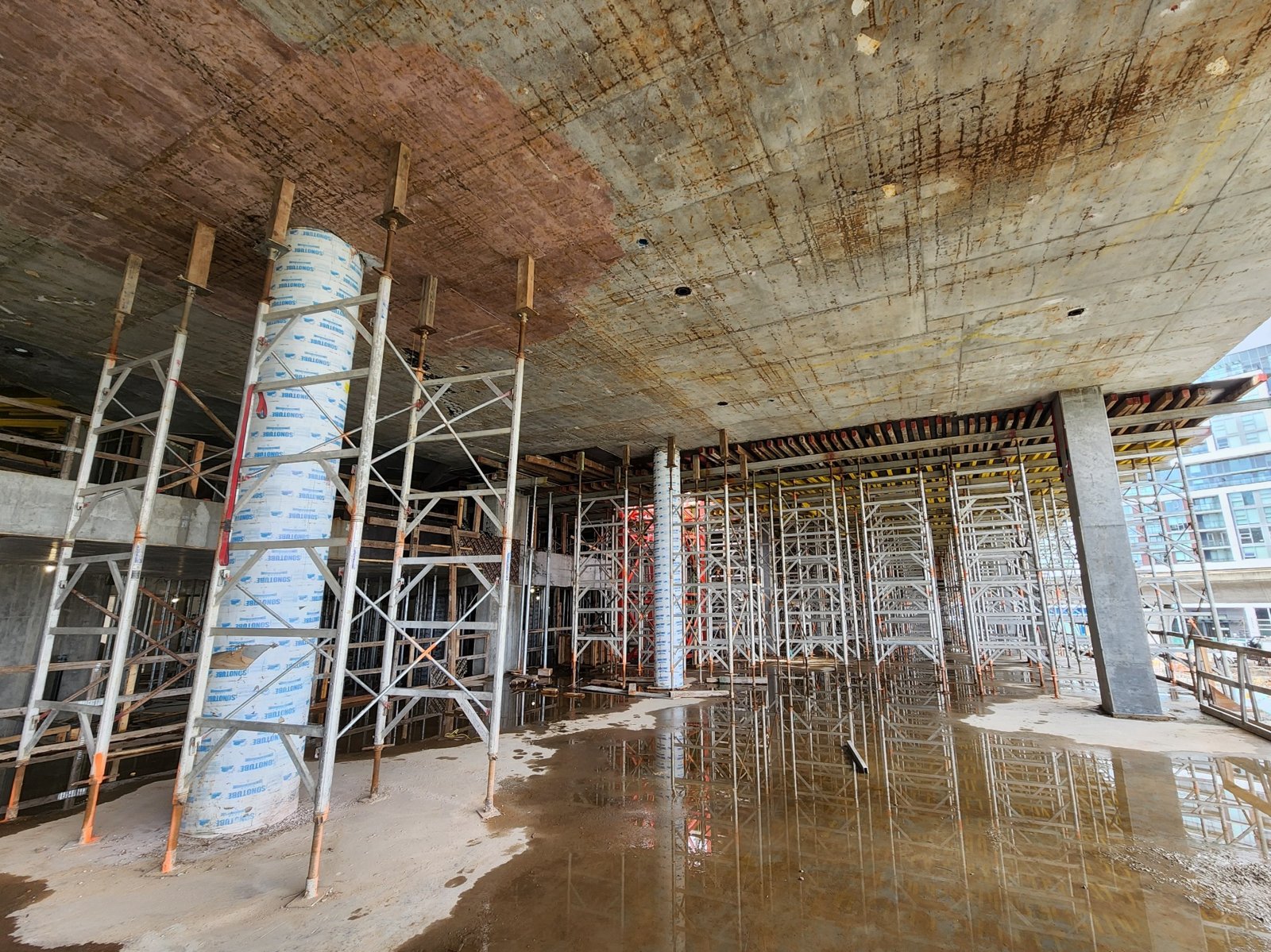
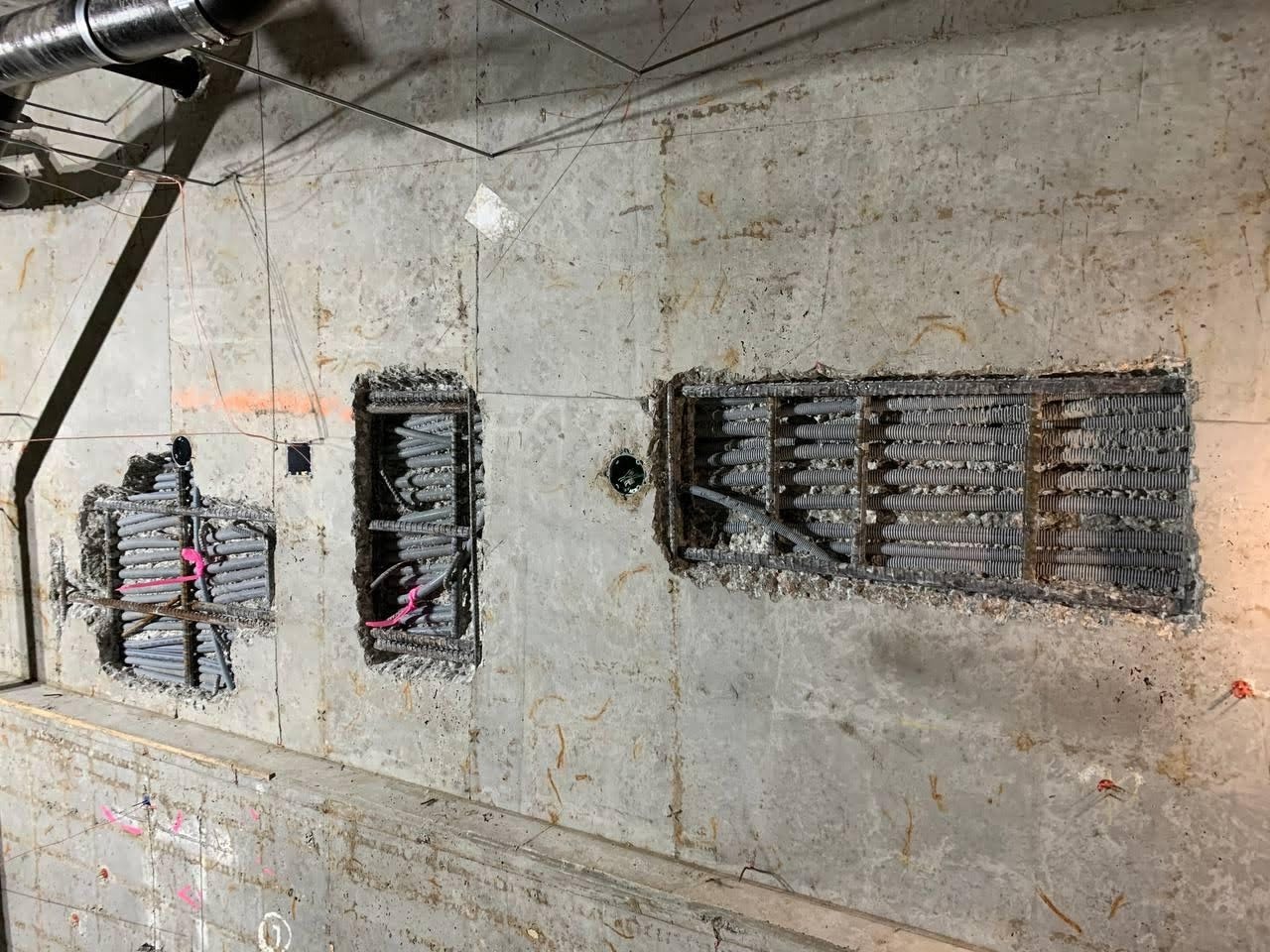
The raft slab was approximately 2 feet thick with heavily congested reinforcement and embedded conduits, creating difficult conditions for proper concrete consolidation.
The project presented a combination of design, execution, and access challenges:
In many cases, the defects were not fully visible and required further investigation to determine their true extent.
The primary causes of the honeycombing were identified as:
These conditions created voids and unconsolidated areas within structural elements.
RapidCrete’s team conducted detailed inspections using:
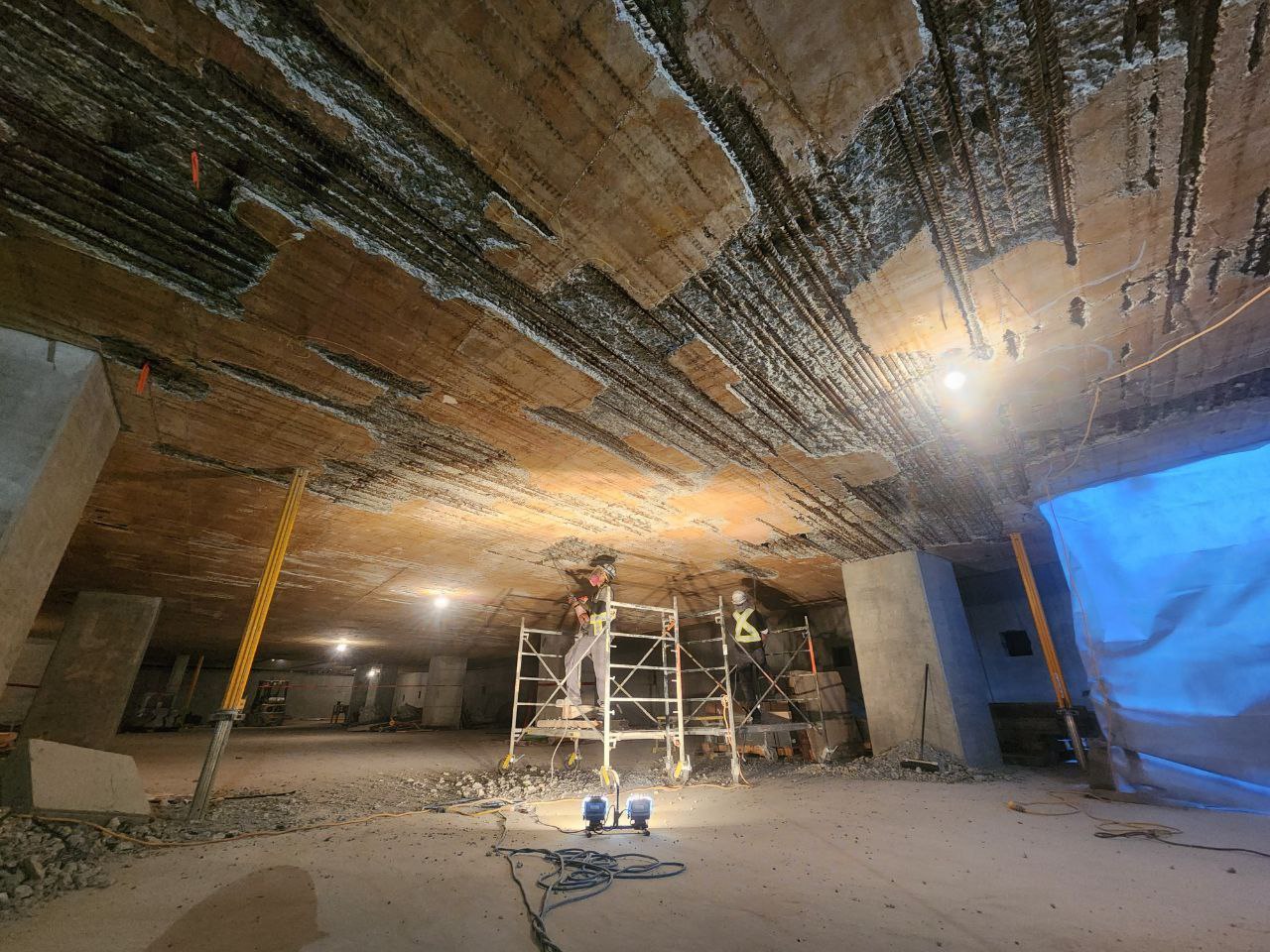
This process revealed multiple hidden voids beneath surface layers. In several locations, what initially appeared minor expanded into larger areas requiring structural repair.
Early detection of these conditions allowed the project team to address potential risks before they escalated.
Due to the variability of conditions, a single repair method was not sufficient.
RapidCrete implemented a combination of:
Different materials and techniques were selected based on:
A detailed repair procedure was developed and approved by:
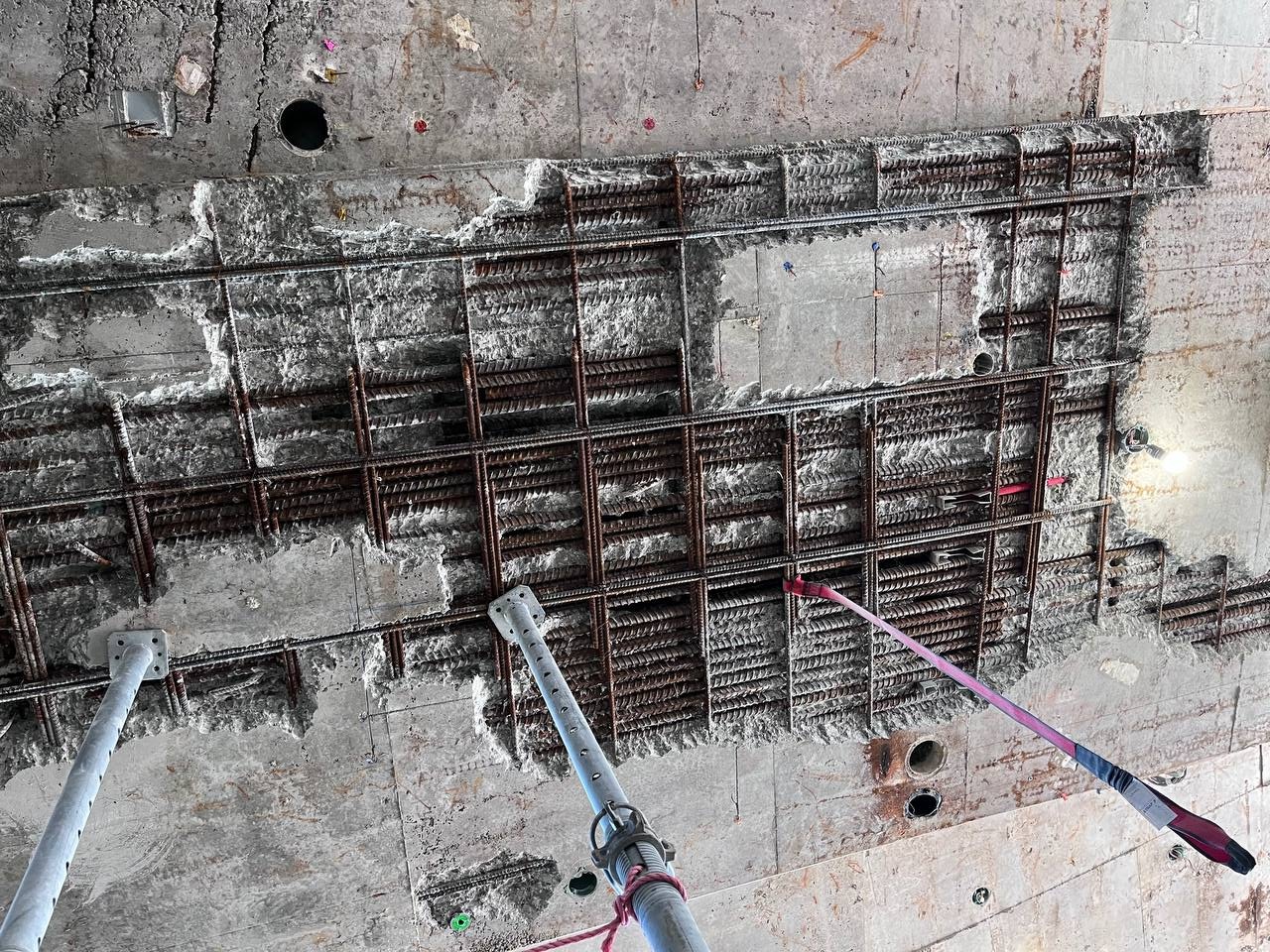
In several areas, heavy reinforcement caused failure of the chairing system, resulting in rebar contacting the bottom of the slab.
This eliminated proper concrete cover and created risk of corrosion.
RapidCrete applied targeted repair methods to restore coverage and protect long-term durability.
Some voids expanded beyond initial expectations and required:
This ensured repairs were completed safely and structurally.
The project required coordinated access and sequencing:
RapidCrete worked closely with the general contractor to maintain workflow and minimize delays.
A full record of repairs was provided, including:
This documentation allowed clear communication with the EOR and provided long-term reference for the project.
Thorough inspection is critical to identify and address underlying structural problems.
Complex repairs require a combination of techniques tailored to each condition.
Identifying hidden voids and escalating conditions early prevents larger structural and financial impacts.
Working closely with engineers and contractors ensures repairs are executed efficiently and safely.
Projects like this highlight the importance of experience, technical understanding, and adaptability when dealing with complex concrete defects.
RapidCrete continues to support high-rise and structural projects with practical, well-executed repair solutions.