
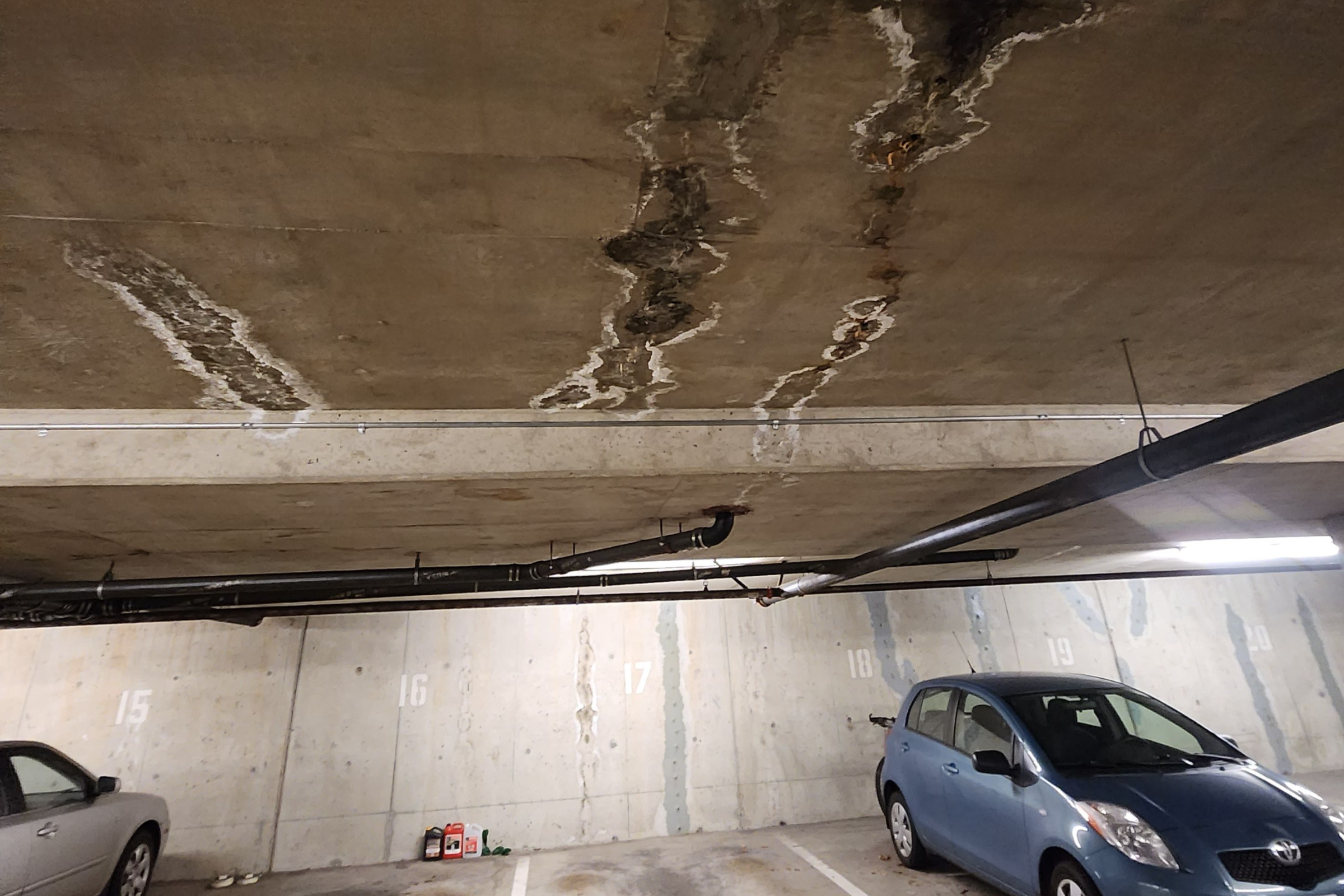
Underground parkades provide essential parking solutions for both commercial and residential buildings, but their location below ground makes them uniquely susceptible to water intrusion. These structures face constant exposure to groundwater, especially in regions with high water tables or heavy rainfall. Surface water runoff from streets and nearby buildings can also seep downward, increasing the potential for leaks.
The concrete used in parkade construction, while inherently durable, is not completely impermeable. Over time, hydrostatic pressure—the force exerted by standing water in the ground—can push moisture through even the smallest pores or cracks in concrete, leading to water ingress. Expansion joints, service penetrations, and areas where concrete slabs meet are especially vulnerable, as these spots often have gaps or less robust sealing.
Unchecked water intrusion leads to serious consequences. Moisture reaching reinforcing steel within the concrete causes corrosion, which expands and cracks the surrounding material—a process known as spalling. This not only compromises structural integrity but also leads to unsightly, costly repairs if neglected. Other issues include the growth of mold, unpleasant odours, and potentially hazardous conditions for users.
Given these risks, it's clear that proactive prevention and regular maintenance are critical for underground parkade longevity. Early intervention with robust design and timely repairs helps keep these vital structures safe, reliable, and cost-effective to operate.
Effective drainage is the first line of defense against water damage in underground parkades. A well-designed drainage system works by directing water away from the structure, limiting hydrostatic pressure and reducing the risk of leaks. Proper grading and sloping of parking surfaces ensure that surface water quickly flows toward drains rather than pooling on or penetrating the slab.
Several drainage solutions are commonly used in parkades. Trench drains, installed along ramps and drive lanes, capture and channel water efficiently. Catch basins collect runoff at strategic points, while sump pumps are essential for removing accumulated water, especially in lower elevations or corners where gravity alone cannot suffice.
Integration of the drainage system must be considered during the design stage. For example, floor slabs and driveways should be sloped at least 1-2 percent towards drains, and expansion joints near drains should be sealed with waterproof materials. All piping and outflows should be sized to handle both regular rainfall and exceptional storm events, reducing the chance of overflow or back-up.
Routine inspection and maintenance are critical for ongoing effectiveness. Drains can become clogged with debris, asphalt, or sediment over time, so regular cleaning and timely repairs are important. Proactive management of drainage minimizes water exposure to the concrete, which not only extends the lifespan of the parkade but also reduces the need for costly repairs down the line.
Waterproofing membranes act as a vital barrier between the concrete structure and water sources, providing an extra layer of defense that complements drainage efforts. Without this protection, water can gradually infiltrate even the most robust concrete, leading to deterioration and costly repairs.
There are several types of waterproofing membranes suitable for underground parkades. Sheet membranes, made of modified bitumen or high-density polyethylene, are rolled onto surfaces and sealed at seams for effective coverage. Liquid-applied membranes are brushed, rolled, or sprayed directly onto concrete, curing to form a seamless, flexible coating that adapts to complex geometries. Bentonite clay systems expand when wet, creating an impermeable barrier that self-seals small cracks or penetrations.
Proper installation is crucial to membrane performance. Surfaces must be clean, dry, and free of debris before application. Sheet membranes require careful overlapping and sealing at seams, corners, and penetrations. Liquid-applied membranes need an even, continuous coat of the correct thickness; multiple layers may be required for maximum protection. All joints and transitions should be reinforced with additional membrane layers or sealing tapes.
Common pitfalls include inadequate surface preparation, poor detailing at edges or penetrations, and rushing the curing process. Adhering to manufacturer guidelines and engaging experienced professionals can help avoid these errors.
Regular inspection of the waterproofing system is essential. Over time, membranes can be punctured, detached, or worn by mechanical damage or building movement. Scheduled maintenance and prompt repairs ensure continued effectiveness, reducing the risk of water-related issues and protecting the investment in both the parkade and the property it serves.
Even with optimal drainage and waterproofing, the dynamic environment of an underground parkade means cracks, movement joints, and service penetrations can develop over time, creating opportunities for water ingress. Addressing these vulnerabilities promptly is critical for maintaining structural integrity and preventing leaks.
Sealing is an essential step in protecting these weak points. High-performance sealants—polyurethane, epoxy, or hybrid formulations—are used to fill cracks and joints, providing both flexibility and adhesion to withstand building movement. Regular inspection of seals, especially at expansion joints and around mechanical penetrations, is necessary to identify and address wear or deterioration early.
When leaks or structural concerns arise, modern concrete repair methods offer robust solutions. Crack injection with low-viscosity resins can restore structural continuity and stop leaks at their source. Surface patching materials, often polymer-modified, deliver durable repairs that bond effectively with existing concrete.
Advanced techniques like concrete scanning, coring, and cutting support proactive maintenance and repair. Concrete scanning locates embedded utilities, rebar, and voids, allowing targeted interventions without accidental damage. Coring enables precise removal or sampling of affected areas for detailed analysis or repair. Cutting is used to create expansion joints or remove damaged sections, ensuring repairs are both effective and minimally invasive.
Engaging professional concrete services ensures repairs are completed to the highest industry standards, utilizing the latest materials and methods. Expert teams combine technical know-how with the right equipment to deliver cost-effective, timely solutions. This consultative approach not only addresses current issues but also supports long-term productivity, safety, and value for both owners and users of underground parkades.
Protecting underground parkades from water damage is not a single action but an ongoing strategy, best started at the earliest stages of planning and design. Early consultation with construction industry experts ensures that every aspect of waterproofing, drainage, and repair is considered, tailored to the site's unique needs and environmental conditions.
While robust protection systems do require upfront investment, this must be balanced against the significant long-term savings from avoided repairs, structural failures, or operational disruptions. Thoughtful planning considers the type and size of the parkade, expected traffic, local climate, and anticipated future maintenance needs, making it possible to select cost-effective solutions that do not compromise quality or safety.
Commercial and residential parkades have different usage patterns and risk profiles. Customizing solutions—whether it’s oversized drainage for high-use facilities, or more flexible waterproofing for structures subject to movement—ensures the best outcome for each project. Incorporating technologies such as concrete scanning and predictive maintenance helps identify potential issues before they escalate.
Central to this approach is a steadfast commitment to quality, productivity, and integrity. Selecting proven materials, adhering to best practices, and working with reputable professionals are key factors in safeguarding the structure and its users.
Ultimately, collaboration with experienced concrete and waterproofing professionals delivers peace of mind. Their responsive, reliable, and consultative guidance empowers property owners and managers to make informed choices, ensuring that underground parkades remain dry, safe, and functional for years to come.