
Industrial flooring is often treated as a surface finish, but in many facilities, it plays a much more important role. When floors are exposed to chemicals, acids, equipment loads, traffic, and operational demands, the quality of the preparation and application directly affects long-term performance.
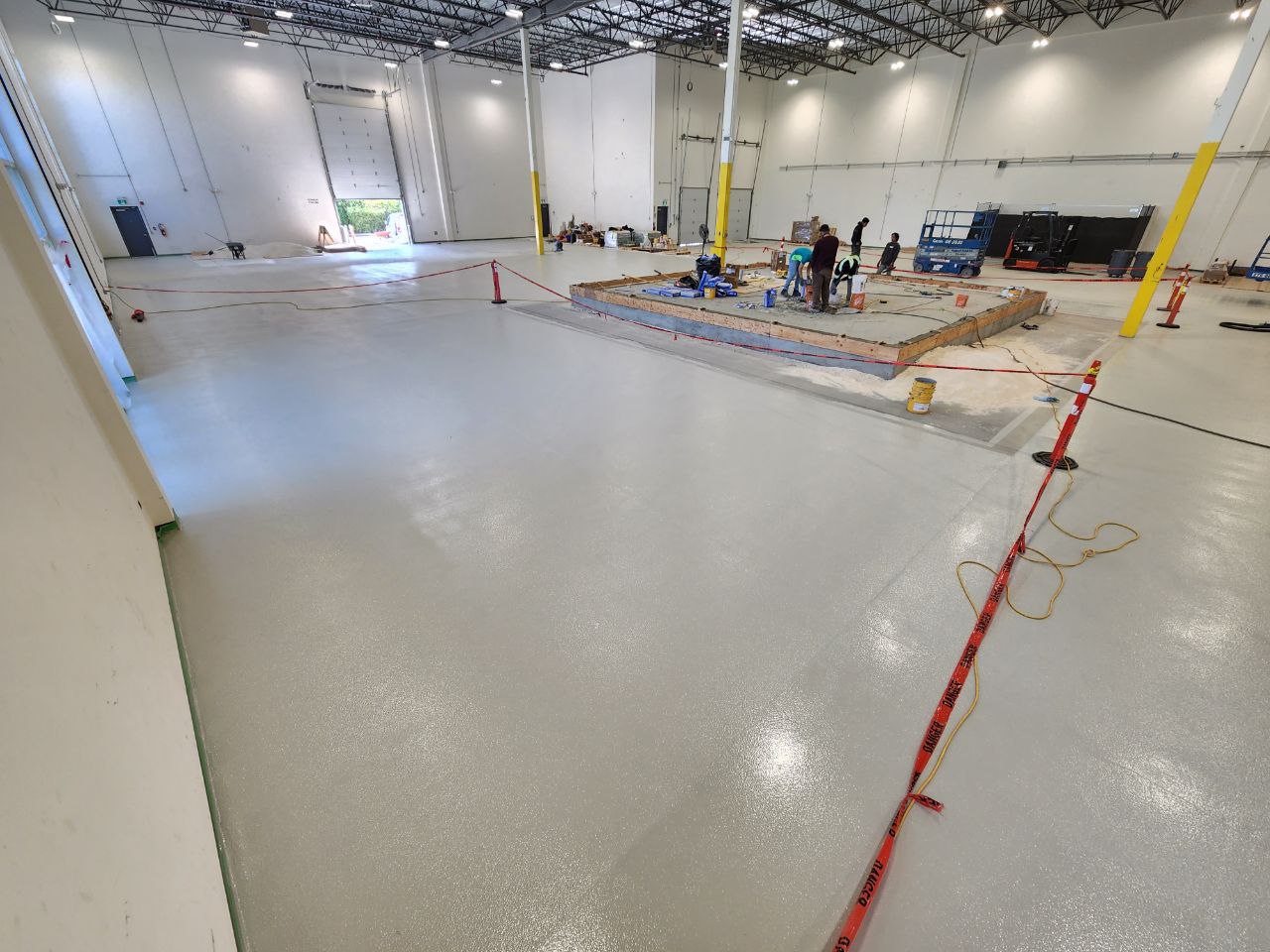
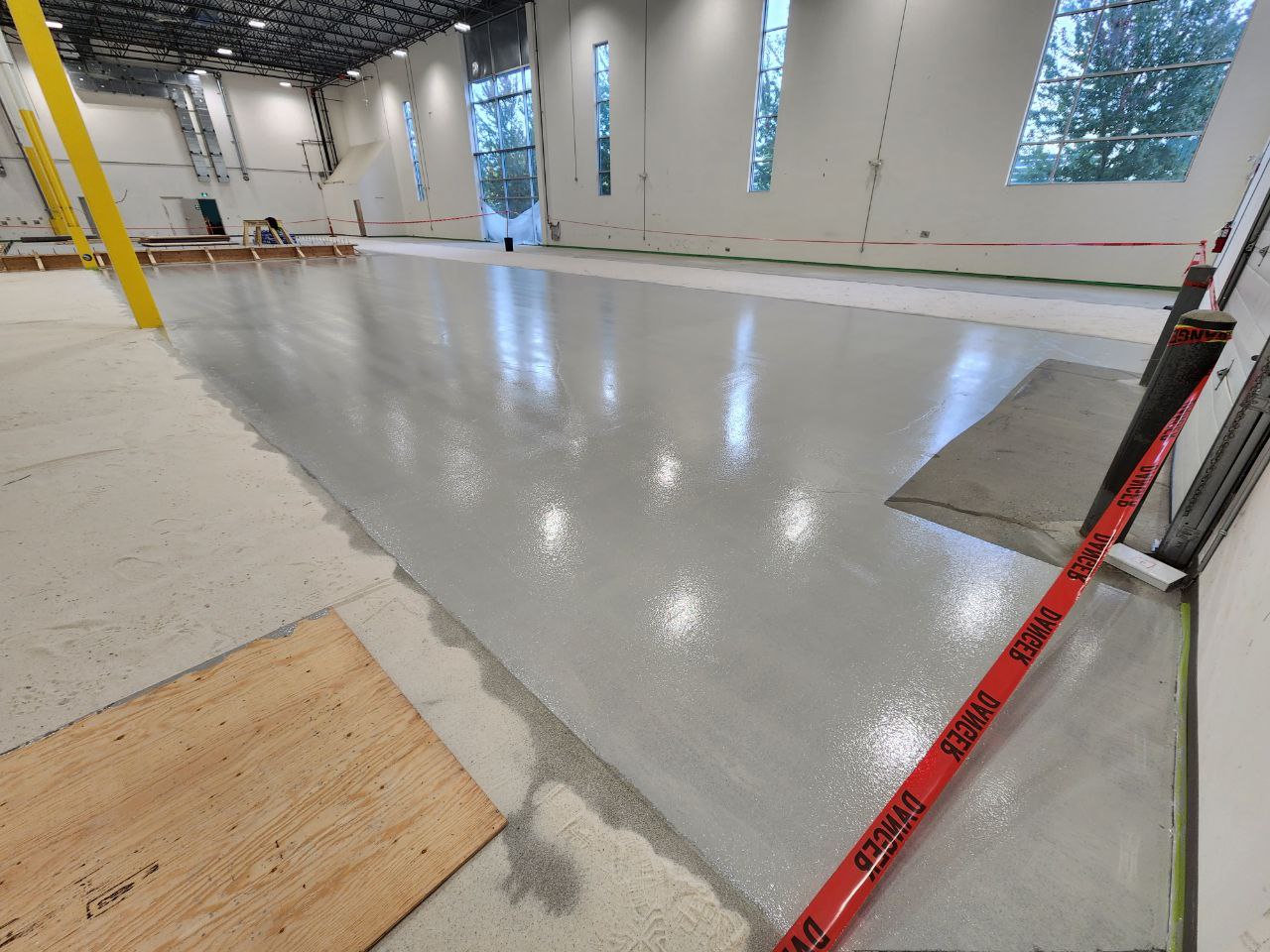
In this project, RapidCrete was engaged to complete a 16,000 sq. ft. chemical and acid-resistant epoxy flooring system for an industrial warehouse in South Burnaby. The client was preparing the space for new silos containing chemicals and acids, and the floor needed to be protected before the equipment arrived.
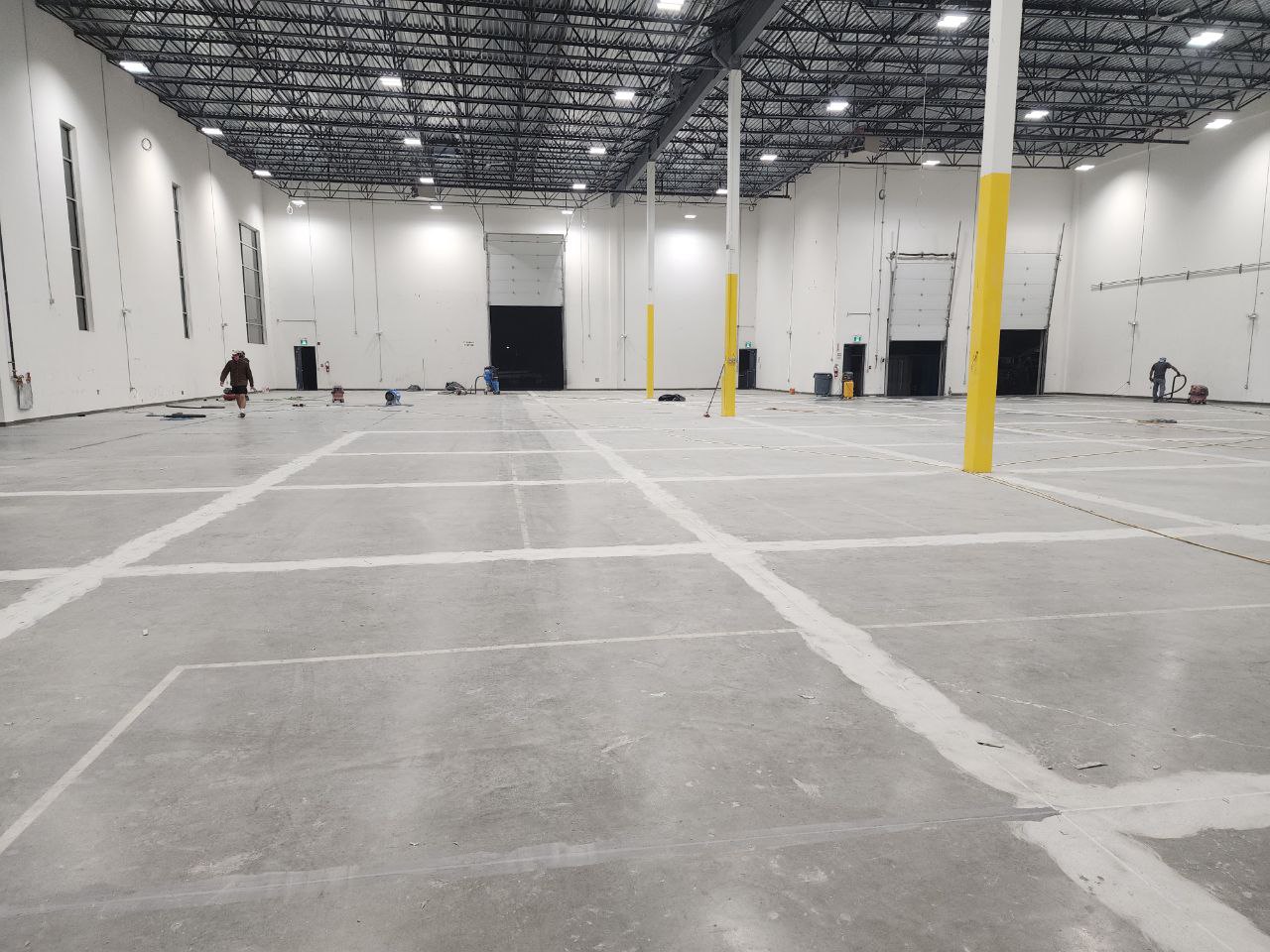
The project required more than coating application. It involved surface preparation, concrete repair, construction joint treatment, GPR scanning, anchoring, concrete pad installation, third-party testing coordination, and quality control.
Project Type: Industrial warehouse
Location: South Burnaby, BC
Floor Area: Approximately 16,000 sq. ft.
Scope: Chemical and acid-resistant epoxy flooring, concrete preparation, concrete pad installation, anchoring, and testing coordination
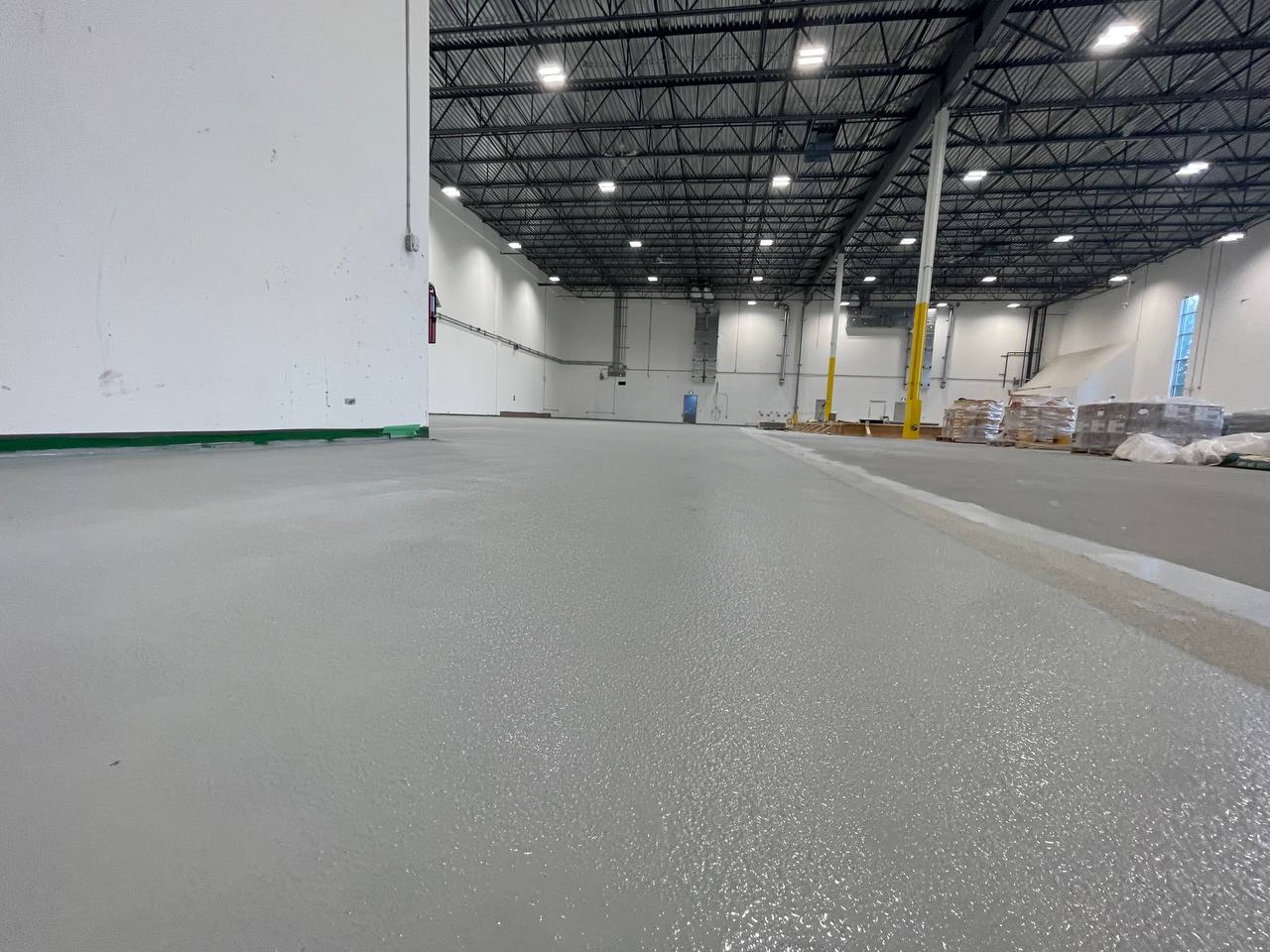
The client required a specialty floor protection system suitable for chemical and acid exposure. The selected system involved a three-coat epoxy application with sand broadcast, and the quality of the bond and application was a critical part of the work.
This project had several important challenges:
This was not only an epoxy flooring scope. It was a coordinated industrial floor preparation and protection project.
Quality control was one of the most important aspects of the project. Before proceeding with the full floor application, RapidCrete had to complete mock-ups and coordinate testing to confirm that the system could meet the required performance expectations.
This included:
The full application could only proceed after the mock-ups and testing were successfully completed.
The existing slab had to be properly prepared before the epoxy system could be installed.
RapidCrete’s scope included:
For epoxy flooring systems, surface preparation is often the difference between a successful installation and future coating failure. This made the preparation stage a critical part of the project.
The client was installing silos and equipment that required proper load distribution. To support this, several concrete pads had to be installed on top of the slab-on-grade.
RapidCrete completed this work using in-house crews, including:
This allowed the epoxy flooring and equipment-support work to be handled as one coordinated scope.
RapidCrete approached the project as a full-scope floor preparation and protection package, rather than a simple coating application.
The work included:
This integrated approach reduced coordination pressure on the client and helped ensure the project stayed on schedule.
The execution followed a controlled sequence:
The schedule was time-sensitive because the floor system had to be completed before the equipment and silos arrived.
The project was completed on schedule and to the required quality standards.
The completed work passed review by:
The client was satisfied with the final result, and RapidCrete was able to manage the entire scope using in-house manpower.
This helped simplify the process for the client and ensured that surface preparation, concrete work, anchoring, testing coordination, and epoxy application were all handled under one contractor.
The performance of an epoxy system depends heavily on the condition and preparation of the concrete substrate. Shot blasting, joint treatment, deficiency repairs, and testing are essential parts of the process.
Mock-ups, moisture testing, bond testing, and manufacturer review help reduce risk before the full floor system is installed.
When scanning, anchoring, concrete pad installation, surface preparation, and coating application are handled by one team, the client benefits from better coordination and clearer accountability.
With equipment and silos scheduled for delivery, each stage had to be completed in the correct order and within the required timeframe.
This project highlights the importance of treating industrial flooring as a complete system, not just a coating application.
RapidCrete continues to support industrial, commercial, and warehouse clients with practical, coordinated solutions that combine concrete repair, surface preparation, scanning, anchoring, and specialty floor systems.